
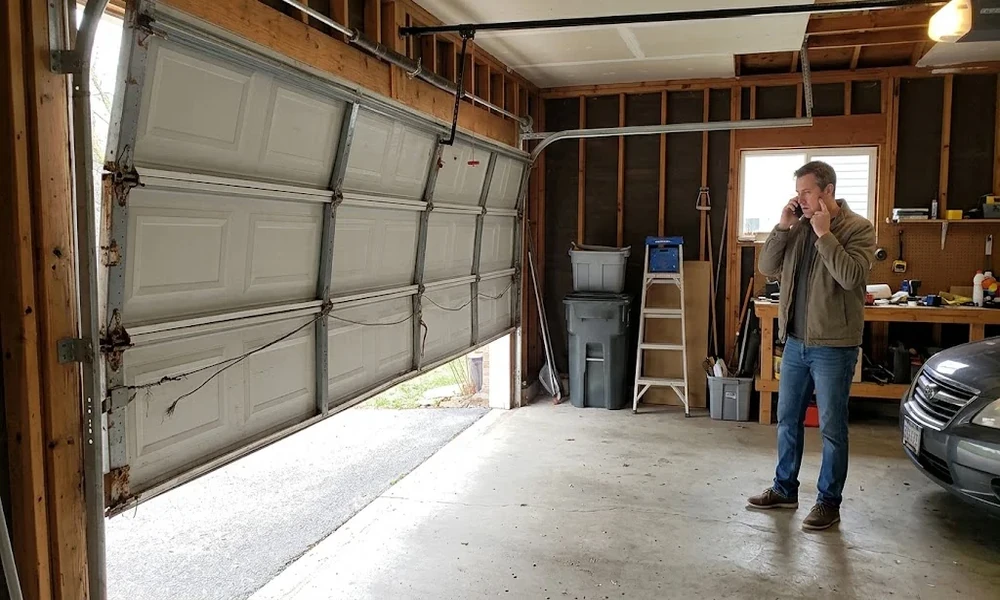
The average homeowner opens and closes their garage door somewhere between four and six times a day, which adds up to roughly 1,600 cycles a year. Most people never think about that number until a spring snaps on a Tuesday morning and they can’t get to work. I spent two years ignoring a squeaky roller because it sounded harmless. It wasn’t. By the time I called someone, the noise had turned into a bent track and a repair bill I could have avoided with one can of lubricant.
That’s the pattern with garage doors. They fail slowly, then all at once, and the failures almost always trace back to a handful of habits. Some of them are things you’re doing right now without realizing it. Others are things you’re not doing because nobody told you they mattered. Either way, the fix is usually cheap and the neglect is expensive.
If you’d rather hand the whole thing to someone who does this every day, Atlanta’s full-service garage door company handles repair, installation, and seasonal tune-ups across the metro. But before you call anyone, it’s worth knowing which mistakes are draining your wallet, because a few of them are things you can correct this weekend.
You’re spraying the wrong lubricant on the tracks
This is the one that catches almost everybody. You hear a grind, you grab whatever’s under the kitchen sink, and you coat the metal track like you’re greasing a skillet. That makes it worse.
Garage door tracks are meant to stay clean and dry. The rollers do the moving, and they’re the parts that need lubrication, not the rails they ride on. When you grease a track, you create a sticky surface that collects dust, pollen, and grit. That grit grinds against the rollers every time the door moves, and within a few months you’ve accelerated the exact wear you were trying to prevent.
Here’s what to do instead:
- Wipe the tracks down with a dry cloth or a lightly damp rag, then leave them bare.
- Apply a white lithium grease or a silicone-based lubricant to the rollers, hinges, and the torsion spring coils.
- Never use WD-40 as a long-term lubricant on moving parts. It’s a solvent, and it evaporates.
- Repeat the whole routine twice a year, ideally in spring and fall.
I’d pick silicone spray over white lithium for the rollers if you live somewhere humid, because it doesn’t attract as much dust. That’s a judgment call, and reasonable people in the trade disagree about it. The one thing nobody disagrees about is this: keep the tracks dry.
Why does your door sound different in January?
Cold weather makes metal contract, and garage door springs are under enormous tension to begin with. A door that ran quietly in October will often sound grainy and stiff by December. That’s normal. What isn’t normal is ignoring it.
Winter is when most spring and cable failures happen, and part of the reason is that homeowners stop going outside to check things. The door still opens, so it must be fine. Then one morning the cable snaps and the door hangs crooked in the frame.
Cold also affects the seals along the bottom and sides of the door. A stiff, cracked seal lets outside air straight into your garage, and if your garage shares a wall with your living space, that air finds its way inside. The Department of Energy notes that air sealing is one of the most cost-effective ways to cut household energy waste, and a garage door seal is a big part of that equation in a lot of homes. A seal costs less than lunch. Replacing one takes about twenty minutes.
The opener gets blamed for everything
When a door reverses halfway up or stops responding to the remote, most people assume the opener is dying and start shopping for a replacement. Usually it isn’t the opener at all.
Nine times out of ten, the real culprit is one of three things: a misaligned safety sensor, a spring that’s lost tension, or a track that’s out of plumb. All three make the opener work harder than it should, and all three will eventually burn out the motor if you let them run.
You can test the sensors yourself. They’re the two small lenses mounted near the floor on either side of the door. Each one should have a steady light. If one is blinking, something’s blocking the beam or the lenses are out of alignment. Nudge them until both lights hold steady, then try the door again.
If the lights are fine and the door still misbehaves, stop pressing the button. Every failed cycle stresses a part that’s already struggling. According to the National Institute of Standards and Technology, standards exist for a reason in engineered systems, and garage door openers are no exception. The safety reverse feature on a modern opener is a tested mechanism, and when the door doesn’t behave, something upstream of that mechanism is out of spec.
What you should actually check every six months
You don’t need to become a garage door technician. You need a ten-minute routine, twice a year, and a willingness to stop using the door when something looks wrong. Here’s the checklist I’d hand a neighbor.
| What to check | What good looks like | What to do if it’s not |
|---|---|---|
| Balance test | Door stays put when you release it halfway up | Springs need adjusting. Call a pro. |
| Rollers | Spin freely, no flat spots or chips | Replace them. They’re cheap. |
| Weather seal | Flexible, no cracks, touches the floor evenly | Replace the seal strip. |
| Track alignment | Straight, parallel, no visible bends | Don’t bend it yourself. Get it looked at. |
| Safety reverse | Door reverses when it meets an object | Check sensors, then call someone. |
One warning worth repeating: never try to adjust, remove, or replace the torsion springs yourself. Those springs hold the full weight of the door, and they release that energy violently when they fail. Even experienced DIYers get hurt doing this.
The habit that saves the most money
It’s not a product. It’s just paying attention early. A door that gets a quick look every six months almost never needs an emergency call, and emergency calls cost more because you’re paying for speed and urgency on top of the repair itself.
I’ll go further. Spending thirty dollars a year on lubricant and a replacement seal will save you several hundred dollars over the life of the door, and it’ll probably add years before you’re shopping for a new one. The National Association of Home Builders has tracked how routine maintenance affects the lifespan and value of home components, and the general pattern holds: things you service last longer than things you don’t.
Most homeowners I know have one door, one opener, and no idea when any of it was last serviced. The fix is a calendar reminder and twenty minutes. Do the springs squeak? Do the rollers turn? Does the seal still touch the floor? Answer those three questions twice a year and you’ll skip most of the repairs you’d otherwise pay for.
So here’s your move. Walk out to the garage tonight, press the button, and listen. If anything sounds off, you already know what to do next. If it sounds fine, put a reminder in your phone for six months from now and forget about it. That’s the whole system. What’s the last thing you lubricated in your house?