
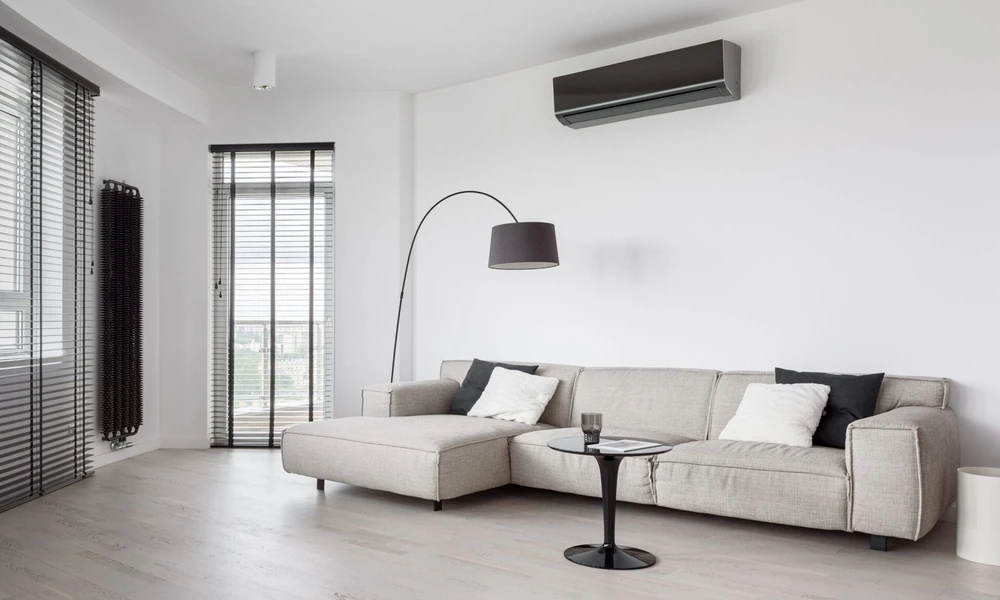
Ask a homeowner what stops them from cooling the second floor and you’ll get one answer more than any other: the room never feels right, and running the central air all day to fix it costs a fortune. That’s the exact gap ductless mini-splits were built to close. They cool one space, or a handful of spaces, without touching your ductwork.
You’ve probably seen the sleek white heads mounted high on a wall in a neighbor’s addition or a converted garage. Here’s the honest version of what those units do, what they cost you in trade-offs, and how to decide whether your house is a good fit.
What a Mini-Split Actually Is, in Plain Terms
A ductless mini-split is a heat pump split into two pieces. The outdoor condenser handles heat exchange with the air outside. One or more indoor heads sit directly in the rooms you want to condition, connected to the condenser by a thin refrigerant line run through a small wall sleeve. No trunk lines, no supply registers, no air handler in the attic.
That last part matters more than most people realize. In a house with leaky or undersized ducts, a meaningful share of the air your central system produces never reaches the room it was meant for. The U.S. Department of Energy has documented for years that duct losses in typical homes are significant enough to change how a house should be sized in the first place, which is why a contractor who never looks at your ducts is guessing. According to the Department of Energy, sealing and balancing ducts is one of the highest-return upgrades a homeowner can make. A mini-split sidesteps the problem entirely by eliminating the duct run.
The Case for Zoning Your House Room by Room
Central air treats your whole house as one climate. That’s a design flaw you feel every August. The west bedroom bakes while the living room freezes, and the thermostat sits in a hallway that represents neither.
Mini-splits flip that. Each indoor head runs its own setpoint. You cool the bonus room over the garage while the rest of the house stays off. You set the nursery to 70 and leave the spare bedroom at 78. During shoulder season, when Gainesville swings from cool mornings to warm afternoons, you run one head instead of firing up the whole compressor.
Zoned control is the single biggest reason people go ductless, and it’s also the reason the systems often pay for themselves faster than their sticker price suggests. You’re not buying a better air conditioner. You’re buying the ability to stop cooling rooms nobody is in.
Where Ductless Makes Sense and Where It Doesn’t
I’ll be blunt about this, because most sales pages won’t be. A mini-split is the right answer in some houses and a waste of money in others.
Go ductless when you’re adding square footage, finishing an attic or garage, dealing with a room that never got ducted, or cooling a house with no existing ductwork at all. Older homes with plaster walls and no plenum space are natural candidates. So are additions where tying into the existing system would mean ripping out ceilings.
Think twice if you already have well-sealed, properly sized ductwork and every room is comfortable. Replacing a working central system with five wall heads is a lot of hardware for a problem you don’t have. A single-zone mini-split for one stubborn room is the smarter middle path, and honestly, it’s the one I’d pick in most retrofits.
A Quick Fit Check Before You Call Anyone
Spend ten minutes on this before you spend money on a proposal. It’ll make you a sharper customer and save you from oversold equipment.
- Count the problem rooms. One or two, and a single-zone or dual-zone system usually wins. Five or more, and you’re looking at a multi-zone condenser with a real design conversation attached.
- Check your panel. Mini-splits draw dedicated circuits. An electrician may need to add breaker space before an installer can mount anything.
- Find your wall real estate. Each indoor head needs clear wall space, good airflow, and a drain path. Condensation has to go somewhere, and gravity is not negotiable.
- Walk the exterior. The condenser needs a level pad, airflow clearance, and a sensible refrigerant line path. A long, awkward run changes the labor quote more than the equipment choice does.
- Ask about cold-climate performance. Standard heat pumps lose capacity as temperatures drop. If you plan to heat with the system through January, say so up front so the equipment gets specified for it.
That last point trips people up constantly. Mini-splits heat as well as they cool, and for many Florida homeowners the heat pump does most of the winter work. But you have to buy the right version for the climate you actually live in, not the one in the brochure.
What Installation Day Really Looks Like
Most single-zone installs finish in a day. Multi-zone jobs run longer, and adding circuits pushes it further. The crew mounts the indoor head, sets the outdoor unit on a pad, drills one small hole for the line set, pulls the refrigerant lines and drain through it, then pressure tests and evacuates the system before charging it.
Evacuation is the step to watch for. Pulling a proper vacuum removes moisture and air from the lines, and skipping it is the quiet cause of a lot of premature compressor failures. If your installer can’t explain why they’re holding a vacuum, ask. Trade standards exist precisely because shortcuts here show up two summers later. The American Society of Heating, Refrigerating and Air-Conditioning Engineers publishes the standards that reputable HVAC professionals work from, and a contractor who can speak to them is usually one who does the unglamorous steps correctly.
Budget for one more thing: sound. A ductless head is dramatically quieter than a central air handler, often quiet enough that you forget it’s running. If quiet is on your list, and it should be, ask to hear a unit running at full speed before you sign.
Maintenance, Filters, and the Long Game
The maintenance story is easier than you’d expect. Rinse the washable filters every few weeks during heavy use, keep the outdoor coil clear of leaves and grass clippings, and schedule a professional check once a year. That’s about it. There’s no duct cleaning, no belt, no bulky filter cabinet to wrestle with.
The flip side is repair cost. Mini-split parts can run higher than comparable central equipment, and not every technician in a small market works on them. If you’re shopping around Gainesville, FL, the practical move is to find someone who installs and services ductless work in-house rather than subcontracting it. Bounds Heating Air handles heat pump and ductless work across Alachua County and the surrounding towns, and full-service coverage through ductless HVAC systems in Gainesville FL means the same crew that mounts your head can service it five years from now. That continuity matters, because a system nobody local will touch is not a bargain at any price.
Prices move with equipment tier, zone count, and how much electrical work your house needs, so treat any single number you read online, including mine, as a starting range rather than a quote. Get two or three site visits. The proposals will tell you more about the contractors than the brochures will.
So, Is Ductless Right for You?
If you have a room that never gets comfortable, an addition that never got ducts, or a house where you’re cooling seven spaces to fix one, a mini-split solves a problem central air can’t. If your existing system keeps every room even and your ducts are tight, put the money toward sealing them instead. Either way, you now know which questions to ask before anyone hands you a proposal.
Go count your problem rooms. That number decides more about your project than any spec sheet will.